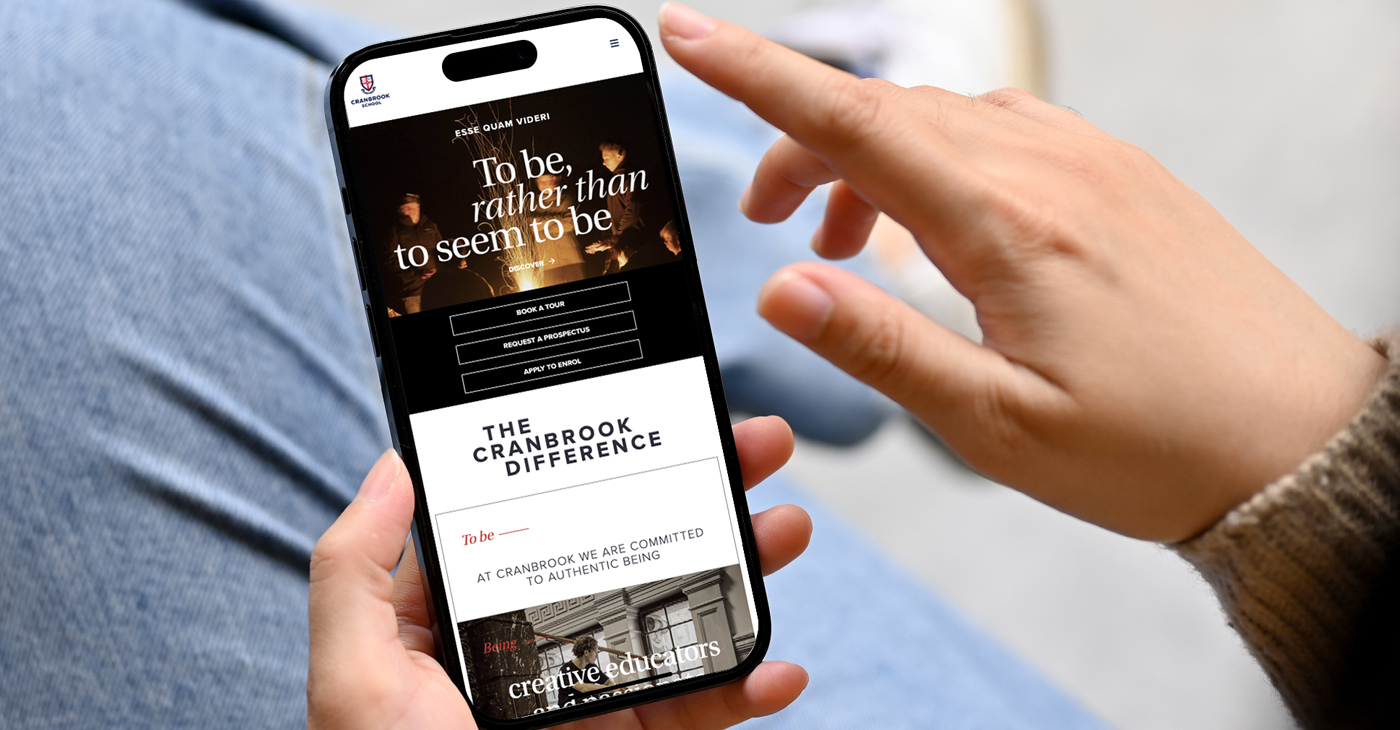
A key question organisations should ask themselves: “What’s it like for our customers to interact with us?” In the context of education this could be thought of as how easy is it for parents, students and staff to engage with you.
No matter how outstanding your educational offering, if it’s difficult for prospective / current families to communicate with you, or find answers to their questions you may not retain them for very long. This can be especially true for younger demographics who have grown up with ‘big tech’ catering to their needs with an optimised Customer Experience (CX).
What is an optimised Customer Experience?
An optimised Customer Experience, or CX, is where each interaction with your organisation and brand is positive.
Meeting your customer’s needs in a timely manner at each stage of the customer journey, from initial enquiry through to enrolment and graduation, builds trust and loyalty with your brand. Satisfied customers are more likely to recommend and refer you to prospective families and staff. So what can you do if your Customer Experience needs some improvement?
Transforming your Customer Experience
Customer Experience transformation can be thought of as the practice of streamlining your services and processes to improve (customer) interactions with your brand.
When rethinking the way your organisation approaches Customer Experience you should consider three critical areas:
1/ Visualise the level of service you want to deliver
What do you want your Customer Experience to look like? What are the outcomes you’d like to achieve?
Evaluate this against your organisation’s purpose and brand promise. Look at your Mission and Vision and decide on what changes in customer behaviour you’d like to see.
With this in mind it’ll become apparent where to focus your attention to make positive, transformative change.
2/ Overhaul processes and programmes
Evaluate your current services with an open mind.
- Do your research. Put yourself in your customer’s shoes.
- Talk to your staff and families to evaluate their viewpoints with respect to service delivery.
- Commit to making the changes necessary for CX improvement.
3/ Build new capabilities
As changes are implemented they need to be supported with training and technology. Staff training can include ‘hard’ skills such as how to complete specific tasks, as well as ‘soft’ skills such as empathy and communication. Effective staff training and support will help minimise customer frustration through efficient handling of customer queries.
Technology platforms should ideally integrate with each other to minimise disruption. Use automation where possible so staff can use their time efficiently. Data analytic tools can often be extended with machine learning and predictive analysis to help fill gaps in the tracking of your customer experience. Building survey or data analysis tools into each step of the customer journey is a great way to encourage feedback and problem solving across processes and departments.
Ensuring consistent brand messaging and tone of voice across platforms is also key to establishing and maintaining brand trust.
Encouraging a customer centric mindset, you’ll create a better customer experience, happier families and staff and a stronger organisation.


